October 14th 2025: Kovalam India
I’ve been in India for over a month now, and time feels both like a tiny dark spot and a long tunnel stretching ahead. Walking along Kovalam beach after enjoying afternoon tea and snacks at Taj Green Cove Resort, I find myself reflecting on the past month’s events and how life has changed. As my eyes wander from the shore to the waves—sometimes rough, sometimes gentle—and a solitary fishing boat, my thoughts drift in many directions, carried by my consciousness through everything I see. I wonder: is there something that binds these experiences, thoughts, and awareness together? Does time truly have a distinct past, present, and future? How can we deepen our understanding of the nature of time and consciousness, if such a reality exists? This reflection is my attempt to grasp whatever meaning those moments could offer.
Prospection and Temporal Integration (*1)
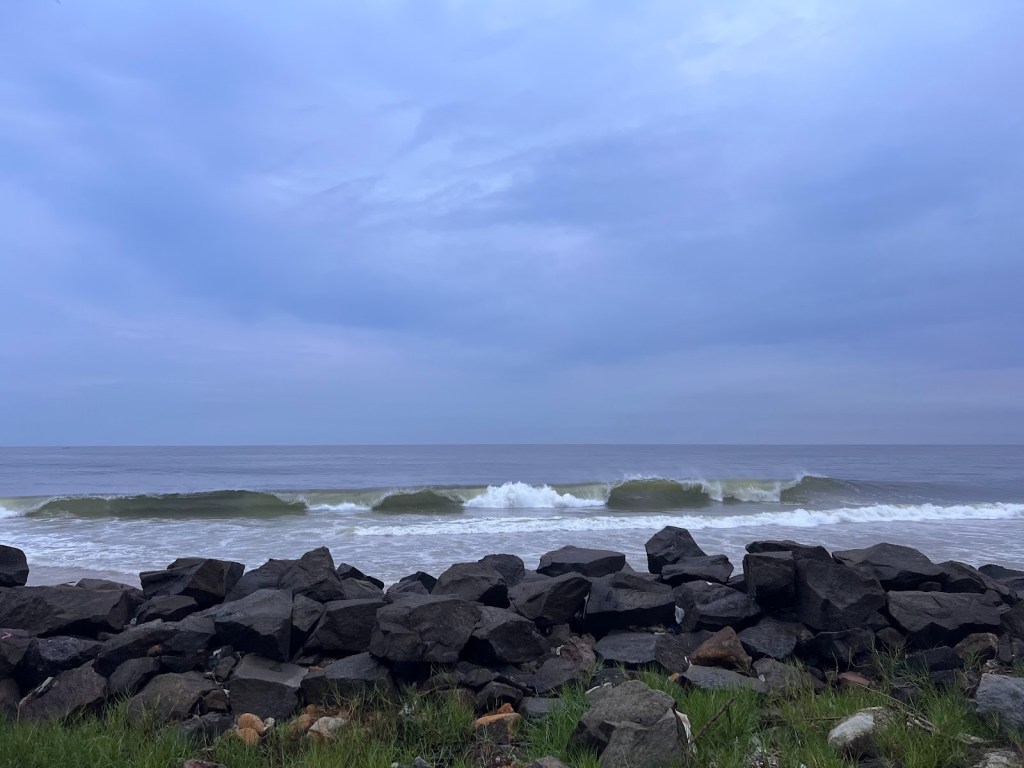
Standing on the edge of a rough sea, it’s easy to be swept away by the unpredictability of the present moment. The crashing waves and turbulent skies offer a powerful metaphor for the dual perspectives we all harbor—one rooted in immediate experience, and another casting forward toward possible futures. This interplay forms the heart of prospection and temporal integration, two concepts that shape how we navigate both literal and metaphorical storms.
The Present: Mindfulness Amidst the Waves
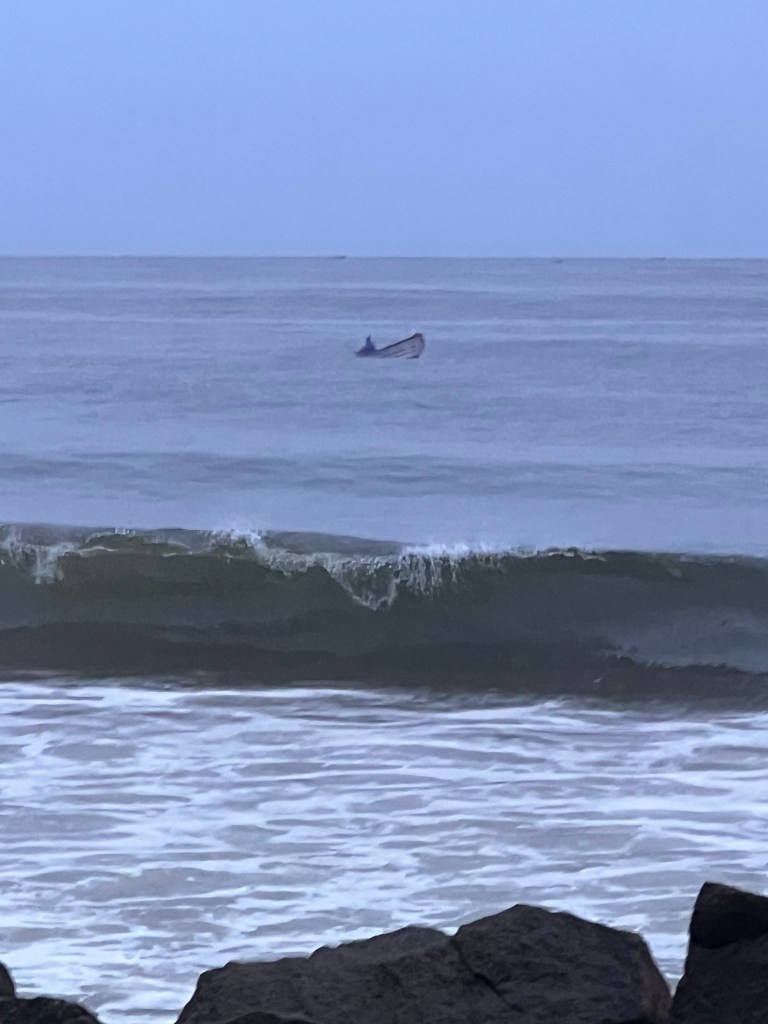
When one looks out over a churning sea, the instinct is often to focus closely on the here and now. This kind of tunnel vision provides a sense of safety and reduces cognitive load, but it comes at a cost. What we see in the present is biased by our current context and point of view. Most of the time our point of view is narrow. It’s easy for the mind and less energy consuming. But this perspective also makes our life complex and emotionally challenging. Paying mindful attention to the immediate—the surge of water, the scent of salt, the wind on the skin—can be grounding, yet risks trapping us in reactivity and emotional turbulence.
The Future: Prospection Over the Horizon
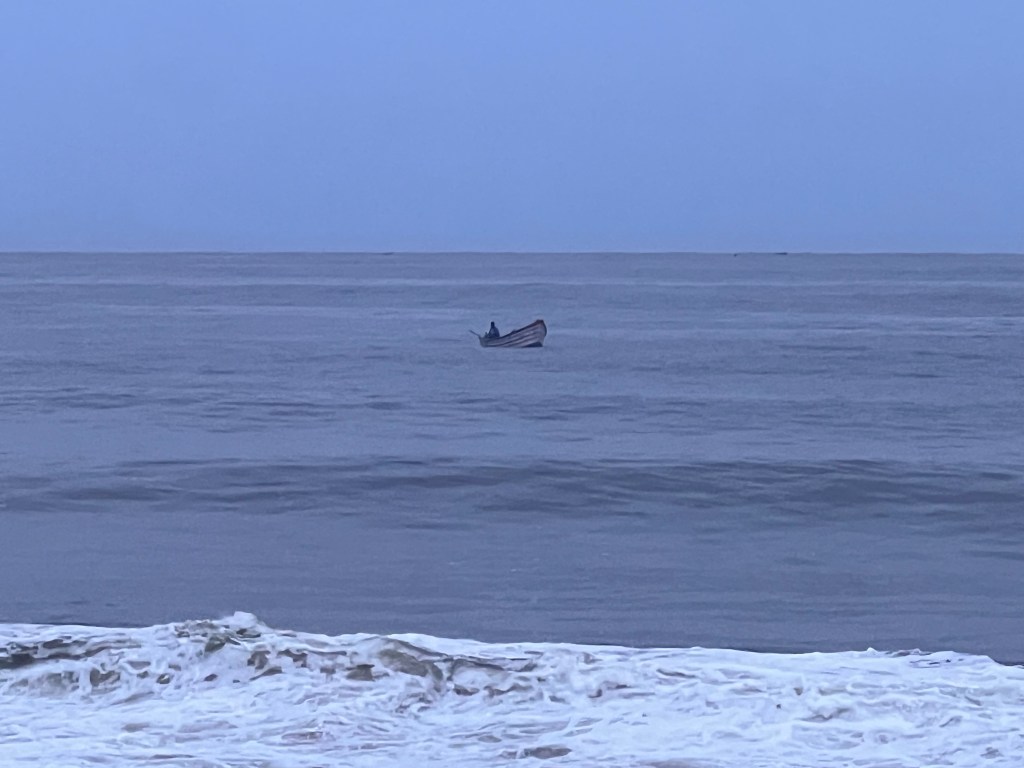
Zooming out, one sees not just waves but patterns, potential clearings, and distant shores. Prospection—the mental act of envisioning and planning for future outcomes—requires a shift in mental circuitry. This “prospect (संभावना) oriented thinking” lets us anticipate, prepare, and even feel hope despite present adversity. If we are able to bring more mindfulness to the present we can develop a sense to see in future. Zooming in and Zooming out requires different circuits and hence they need to be developed. Like sailors charting a course, individuals practicing prospection blend their understanding of present circumstances with an ability to project pathways forward.
Temporal Integration: Synthesizing Both Views
Integrating both perspectives is not merely about toggling between mindfulness (ध्यान) and prospection (संभावना), but about combining them for a richer experience. Temporal integration calls for attentiveness to both present sensations and future possibilities: Maintaining awareness of both now and later is considered important for goal-setting, self-regulation, and effective decision-making – a present-future synthesis, highlighting how individuals relate immediate actions to broader life trajectories. The rough sea, then, becomes less daunting—not because it is calmed, but because the observer holds both the force of the current and the promise of distant horizons in balance.
Reflections from the Shore
When contemplating life during turbulent times—whether on a literal shore or navigating personal upheaval—the lesson is clear: cultivate both points of view. Root yourself in present mindfulness (वर्तमान क्षण में पूरी तरह जागरूक और उपस्थित रहना) to avoid being overwhelmed, yet practice prospection (संभावनाओं की खोज) to keep sight of where you wish to go. Ultimately, it is the integration of these two temporal dimensions that guides us through instability toward growth and resilience.
Notes
*1: In philosophy and related cognitive sciences, prospection refers to the mental simulation of future events and possibilities, while temporal integration is the process by which discrete experiences or stimuli are bound together to form a continuous, unified perception of the present moment or a sequence of events.


Leave a Reply