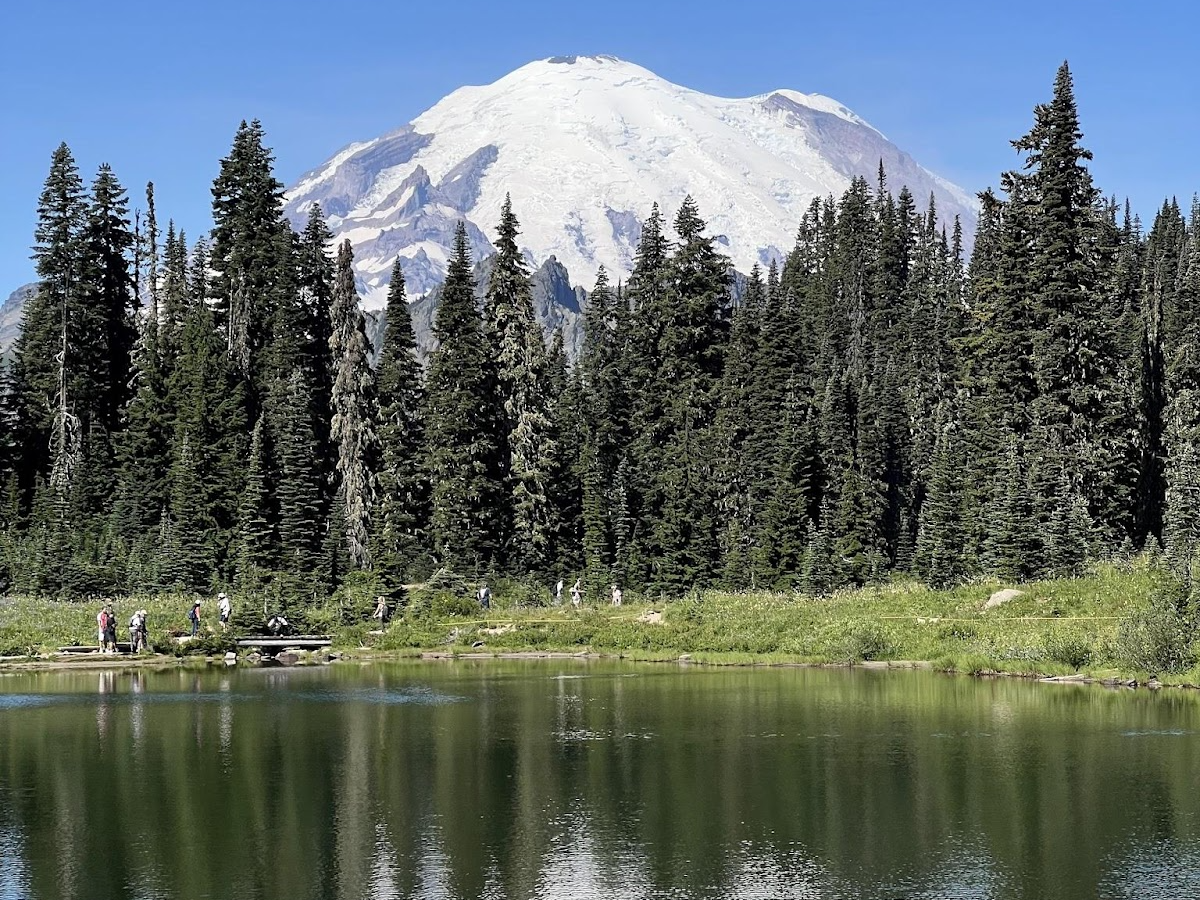
I recently visited Mount Rainier National Park during its summer blooming season. The valley was filled with flowers, colors, and the buzzing of bees. It was an early morning, and the breeze of fresh air and subtle fragrance touched my senses.
Although I wasn’t deliberately trying to be aware of nature’s beauty and serendipity, I suddenly realized what a great opportunity it was to experience this moment in slow motion. I felt a little unsure of where to begin. How could I fully immerse myself in this natural beauty?
A striking contradiction in my own nature became apparent. My thoughts weren’t slowing down, even when I was aware of my own rapid pace. It seems that even when we consciously want to slow down, we struggle. We tend to view the world through the lens of our own velocity.
This made me wonder what the world would look like if our pace matched the rhythm of flowers, bees, plants, and nature itself. I chose to capture that stillness and live the beauty of the moment.

The meadow spread before me like a living tapestry. It was a blooming season—the valley was full of flowers, colors, and bees. It was an early morning. The breeze of fresh air and subtle fragrance touched my senses.
I felt rushed, and I could see the potential of joy, complete immersion with nature, an unbounded joy.
My first instinct was familiar: to move quickly from bloom to bloom, capturing each one, cataloging the abundance. But something in their stillness stopped me. They weren’t performing or competing for attention. They simply were, each flower complete in its own small space, unhurried in its becoming.
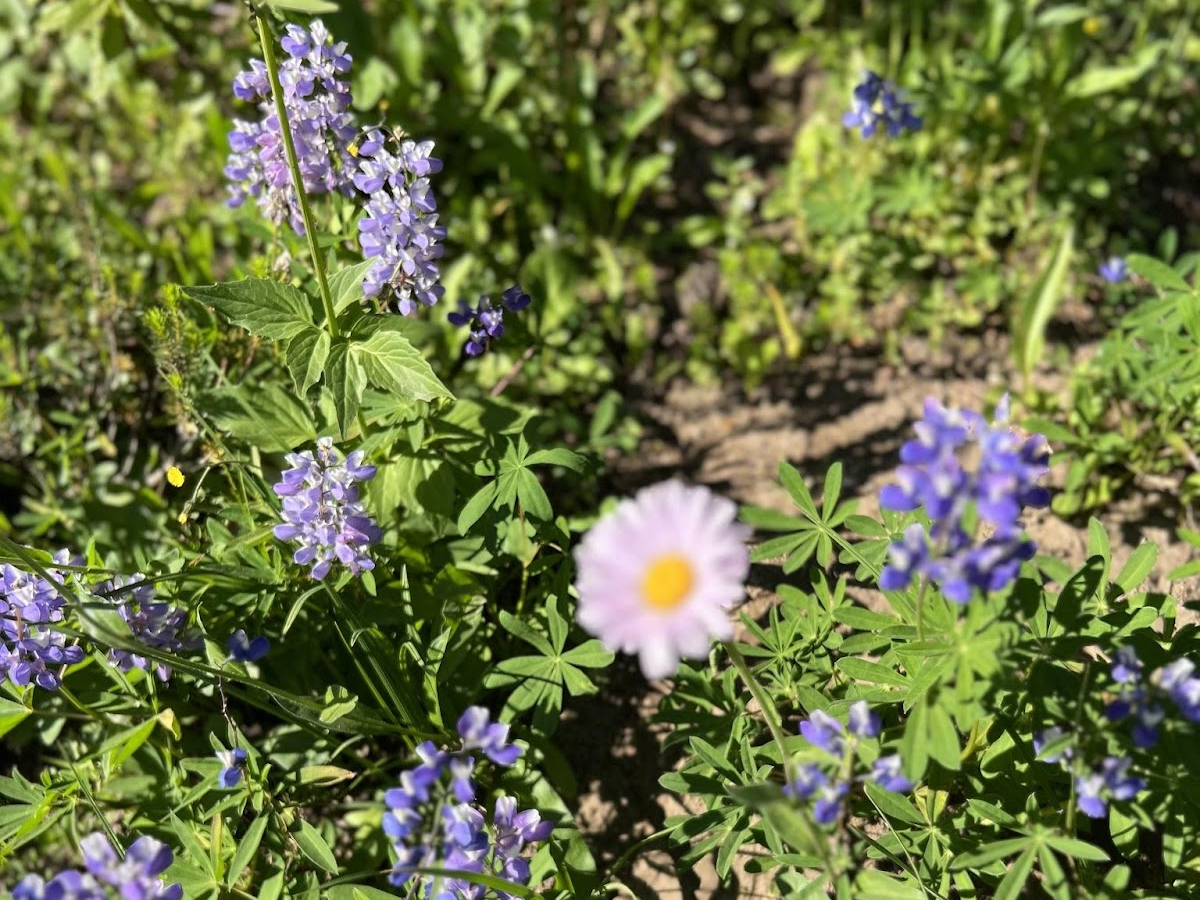
I knelt beside a cluster of pale purple flowers, their sunny centers like small suns in the green world. “Slow down,” I whispered to myself, trying to match what I imagined was their pace. But even in my deliberate stillness, I could feel my inner rhythm still rushing, my thoughts jumping between past and future. The flowers remained slightly out of focus, as if they existed in a gentler dimension of time, one I was still learning to inhabit.
Here was the paradox I hadn’t anticipated: the harder I tried to slow down, the more aware I became of my own velocity. My mind kept reaching forward, planning the next observation, the next moment of connection. The flowers, meanwhile, seemed to exist in a state of effortless being—not trying to be present, simply present. They weren’t working to achieve slowness; they were slowness itself.
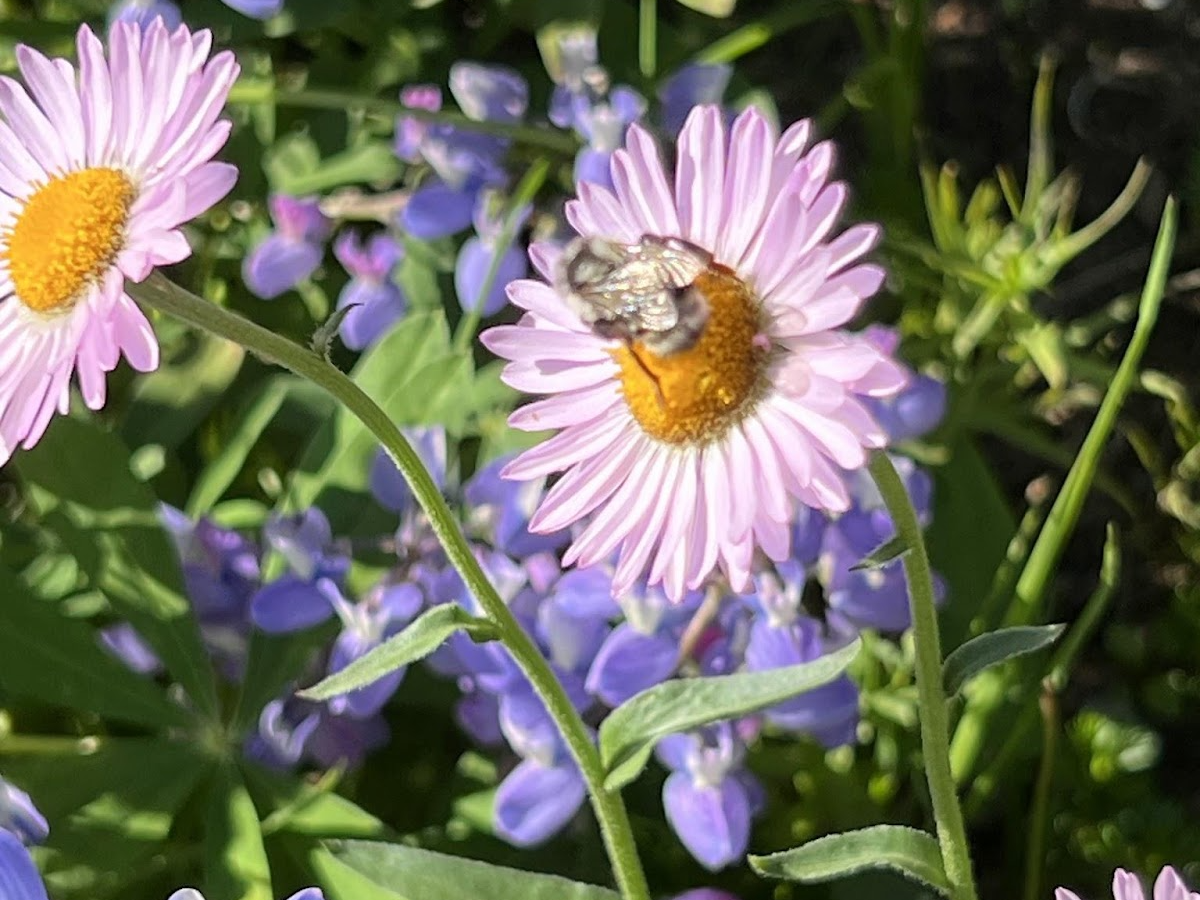
Then I saw her—a small bee settled completely on a pink daisy, her movements deliberate and unhurried. She wasn’t racing against time or trying to visit every flower in sight. Instead, she was fully committed to this one moment, this one bloom, working with a patience that seemed to match the flower’s own rhythm of opening and offering.
Watching her, I finally understood what “Nature time” looked like: not the absence of movement, but movement in perfect harmony with the present moment. The bee wasn’t trying to slow down or speed up—she was simply synchronized with the flower’s natural pace, creating a partnership that required no effort, only presence.
This harmony is hard for humans to achieve because we don’t only move physically—we continue to move mentally, dwelling in the past and future. What an irony: the wisest mammal is the one captive in his own mind. And we all think we are free. This mental jail is expanding through our dependence on devices and constant micro dosing of dopamine from social media.
What can we do to slow ourselves down? How do we find our own “place beyond slow”—like a bee hovering over a flower? We don’t have to stop everything; we just need to hit the brakes one moment, one breath, and one step at a time. In this world of speed, we need deliberate pauses. Can we pause for a moment, close our eyes, and just breathe?


 Life in a slow lane
Leave a reply to gracefullyfading72405695f4 Cancel reply